Extended project · Interactive concept
Giving flesh to bones: how kanji lost its pictures
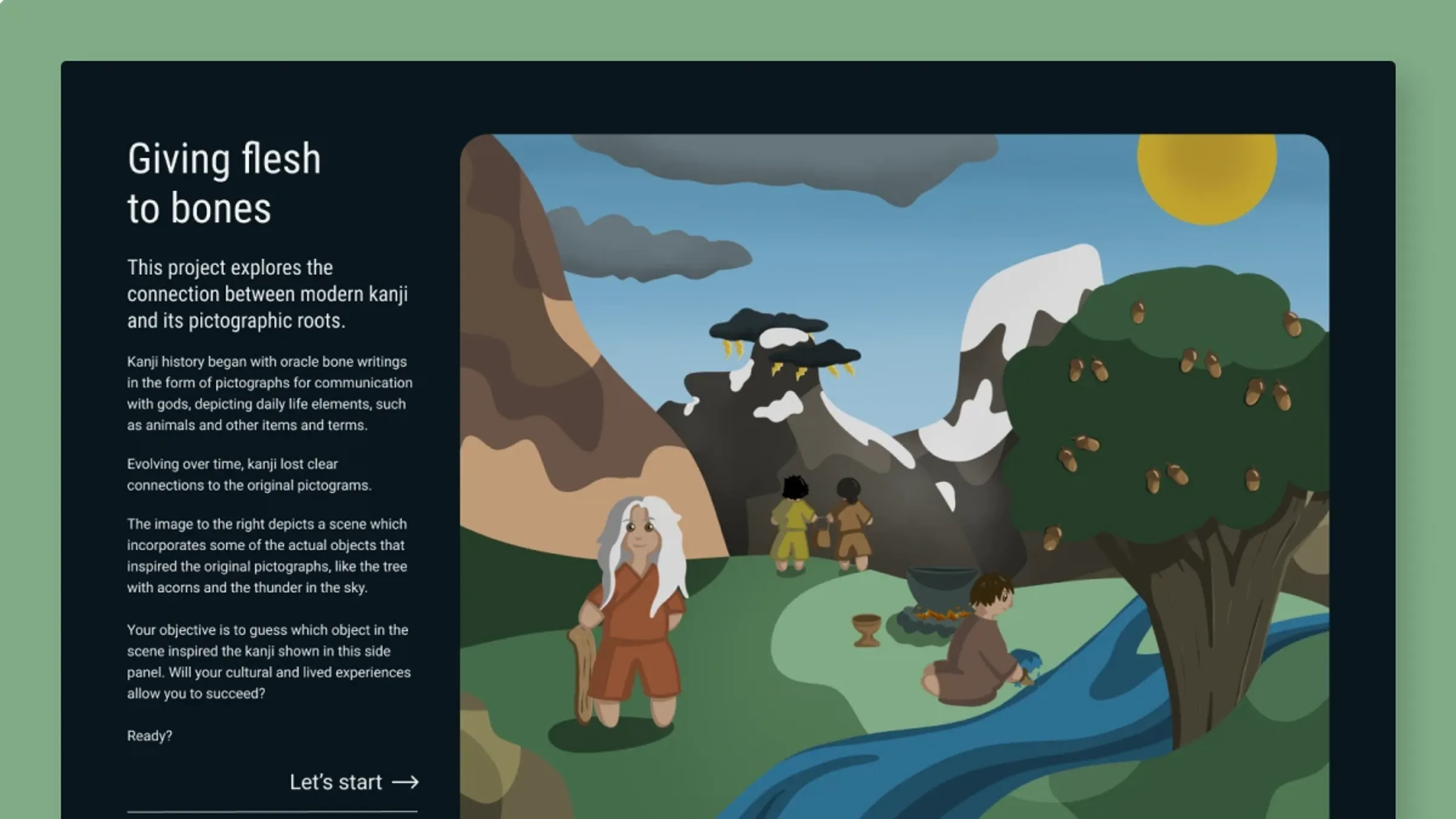
Extended case study — includes research, iterations and feedback rounds. Short on time? Read the condensed version →
01The critique
The task: pick an example from graphic design history and build a design critique around it. I picked kanji itself. Over centuries, characters that began as pictograms — drawings of actual things — became ideograms, abstract and standardized. Efficient, but stripped of their “flesh” along the way.
Modern kanji are built for fast communication, and that's fine. But something real was lost: the visual connection to what each character once showed. The project questions that trade, and asks what matters more — a character's ancient origins, or how people use it today. The framing and the title borrow from Noriko K. Williams' The Key to Kanji, which puts the flesh back on the characters' bones.
Sources
- Williams, N. K. (2010). The Key to Kanji: A Visual History of 1100 Characters.
- Samara, T. (2023). Making and Breaking the Grid (3rd ed.).
- Ambrose, G. & Harris, P. (2016). The Fundamentals of Typography.
- Yule, G. (2006). The Study of Language (3rd ed.).
- Kanji Portraits, a kanji etymology resource.
02From poster to play
My first proposal was a poster series about kanji's pictographic roots. While working on the concept I realized the idea would be stronger as an interactive experience. If people discover the connections themselves, they become participants in the history instead of readers of my opinion. The work shifted from “here's what I think” to “here's what you can find.”
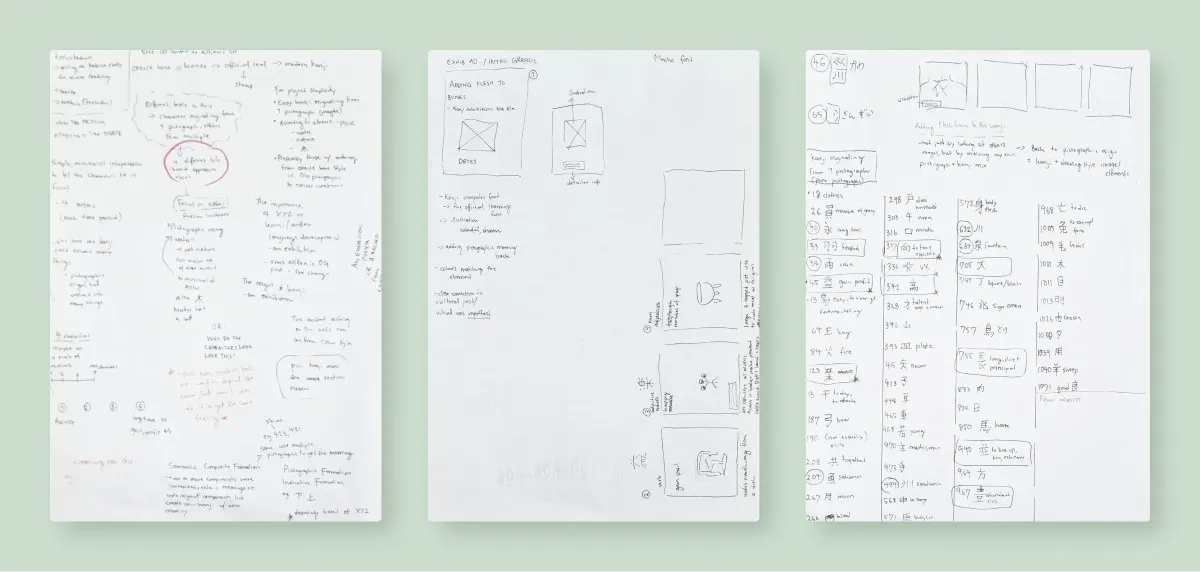
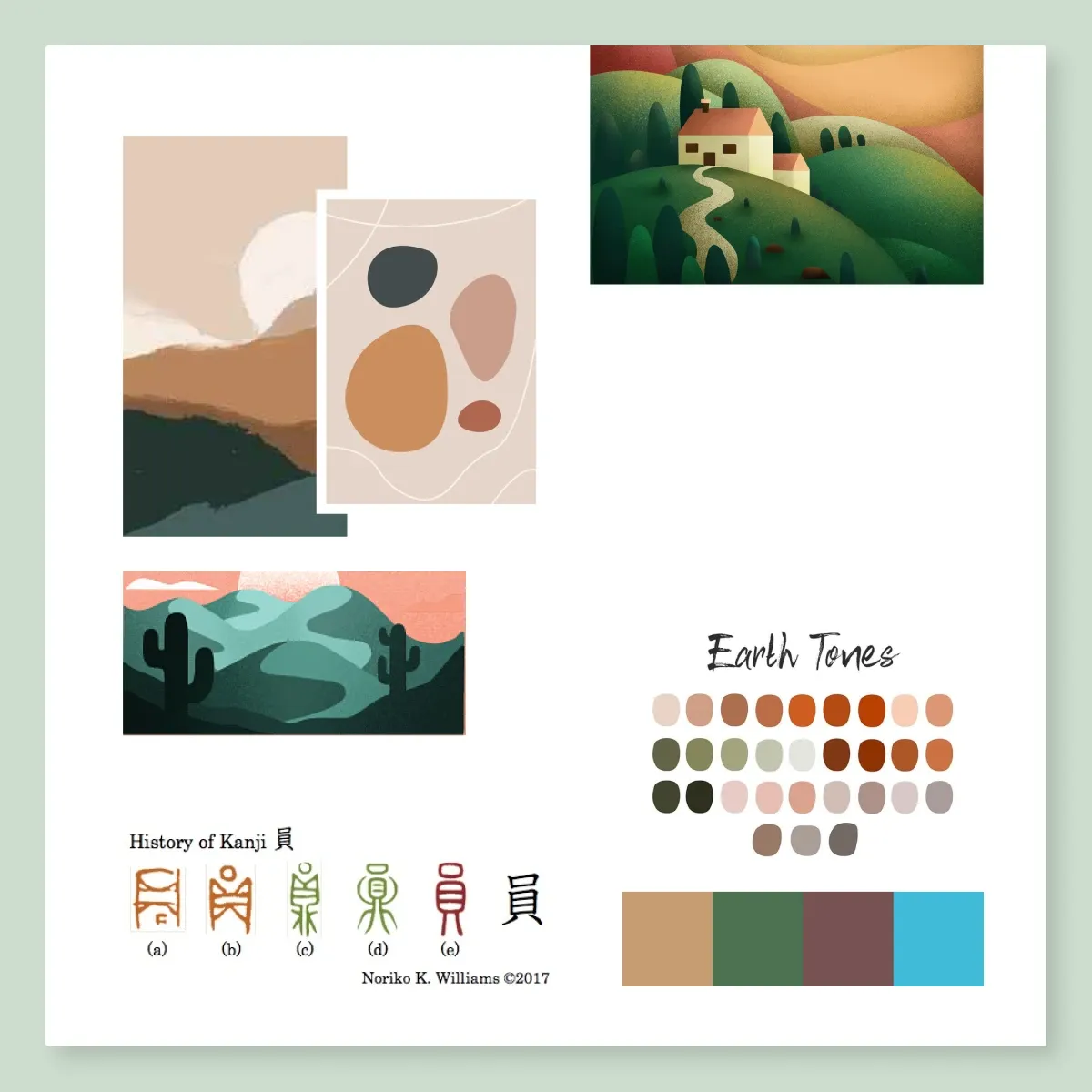
03The game
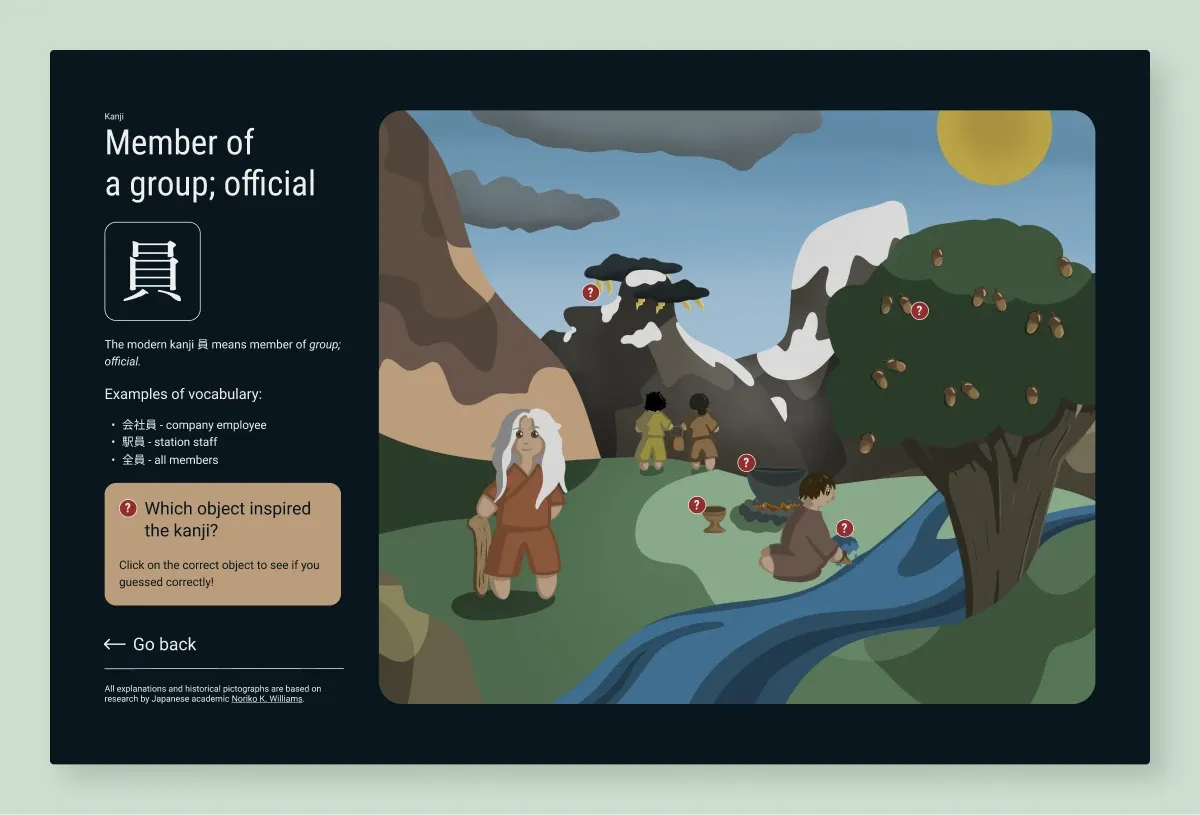
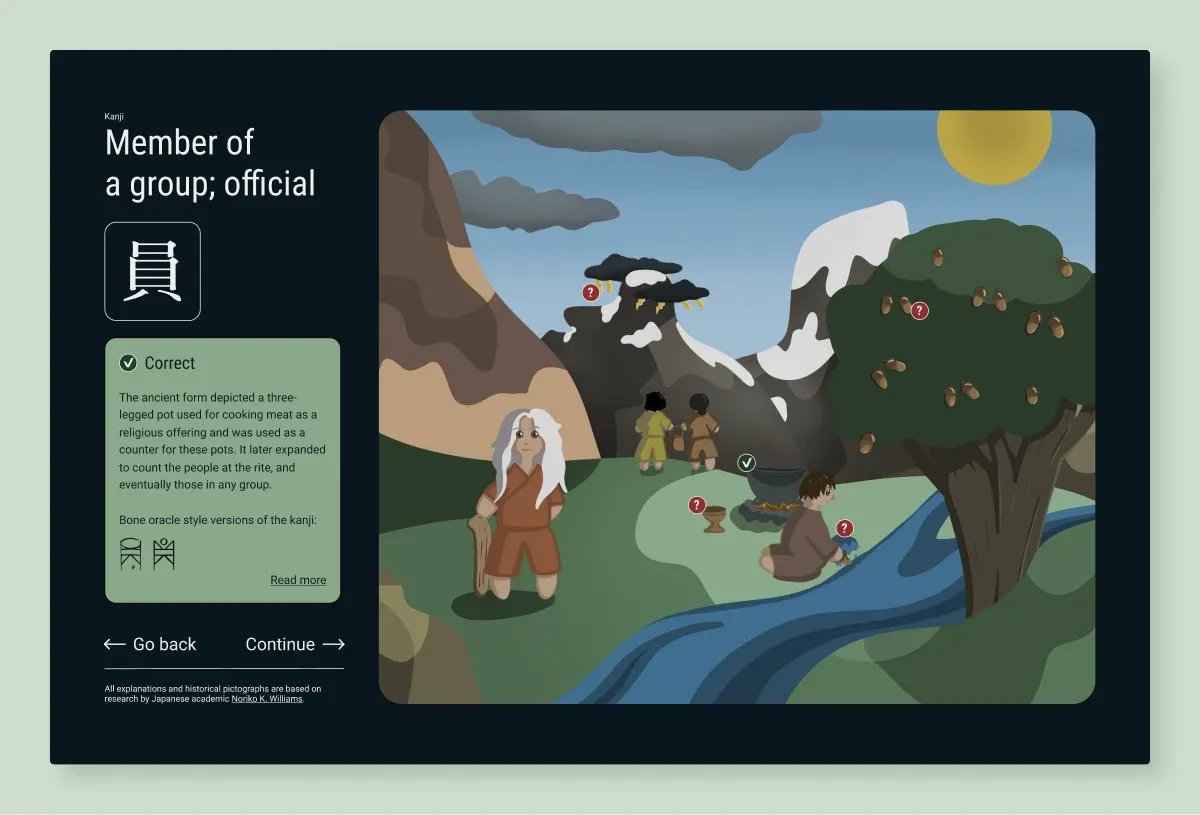
A matching game that connects modern characters to their original picture forms. A wrong match isn't a failure. The gap between what you guessed and what the character became is the whole story the game wants to tell.
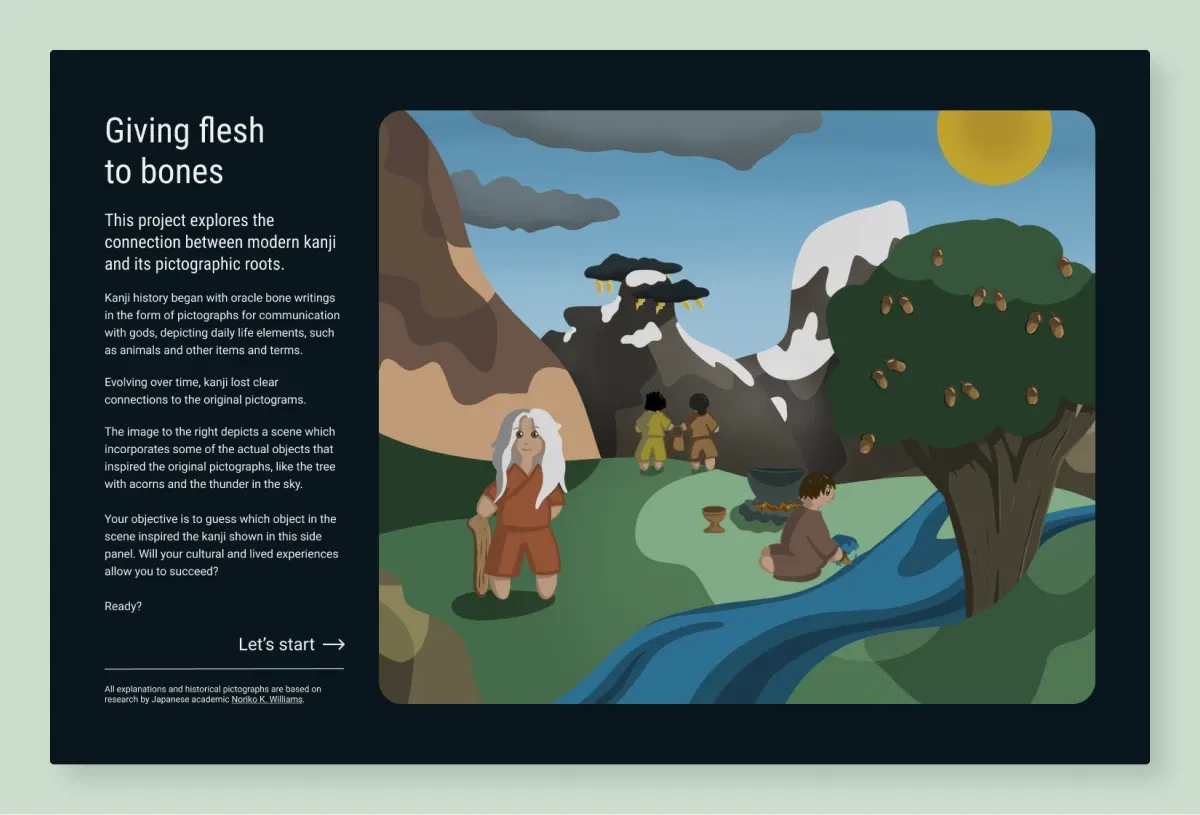
04What I learned
- Interaction changes the message. Designing for engagement turned a static argument into active exploration, and opened up what the work could teach.
- Everything isn't required at once. Timers and scoreboards could wait. The simple structure already served the goal, and extra features are easier to add once real users show what they need. I started this project during my own Japanese studies. It's the game I wanted to exist.